Search

John Hadden Photography

Photography of the Natural World

Tag

flowers

Hummingbird family portraits

hummingbird-perched
Papa ruby throated hummingbird

We have a prodigious bee balm patch over by the pond that is a favorite of all kinds of pollinators. We also have a family of ruby throated hummingbirds in residence this summer, and they were in full play-and-feed mode yesterday afternoon—zipping about above the flowers, chasing each other, feeding, and, very rarely, perching for a few brief seconds so I could get a shot off. Here are some family portraits.

Shots taken with Panasonic GX8, Lumix 100-300mm lens, ISO 1600, f/5.6, various shutter speeds.

hummingbird-feeding
A juvenile feeding
_1020782
Mama hummingbird (or perhaps one of the juveniles?)
hummingbird-juvinile
A juvenile male takes a brief break from the action


Eye to eye

eye-to-eye
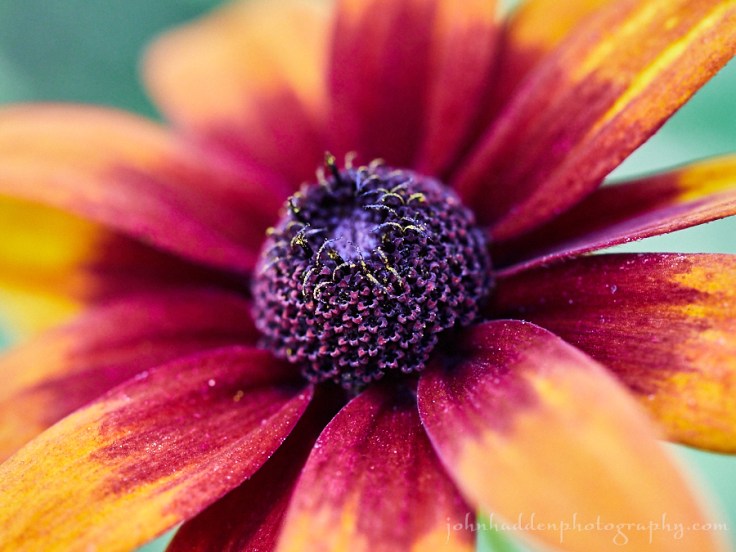
Looking a black-eyed Susan in the eye

This wonderfully colored black-eyed Susan (rudbeckia) caught my eye as I headed for a swim at Blueberry Lake in Warren, VT.

Panasonic GX8, Olympus 60mm macro lens, ISO 1600, f/2.8, 1/500″ exposure.

Consequences

consequences
The crab spider makes a catch!

Following up on yesterday’s “Dubious welcome” post, the little crab spider’s patience paid off as it managed to grab this honey bee as it visited the coneflower. I can only imagine the struggle as it’s hard to believe such a diminutive a spider could capture such a big bee. Quite the prize!

Panasonic GX8, Olympus 60mm macro lens, ISO 1600, f/13, 1/1000″ exposure.

Dubious welcome…

crab-spider-coneflower
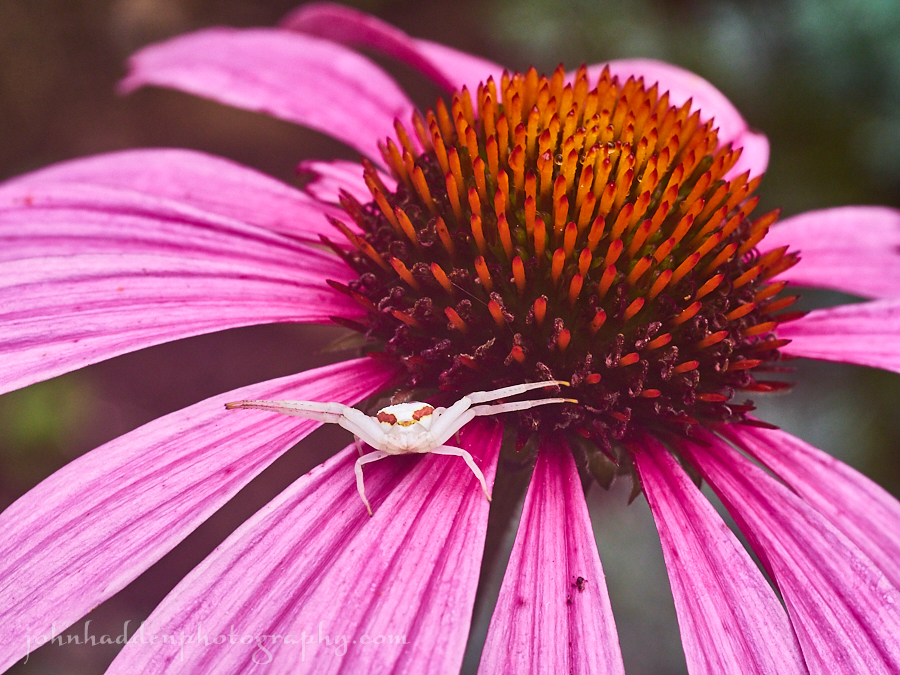
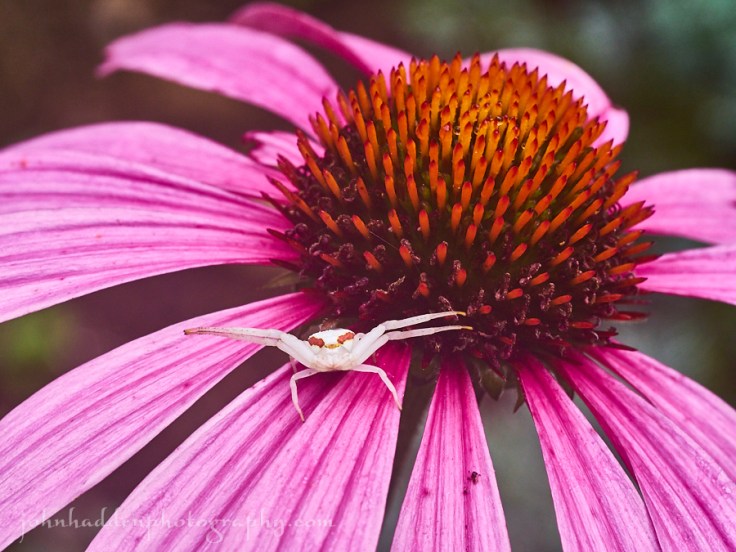
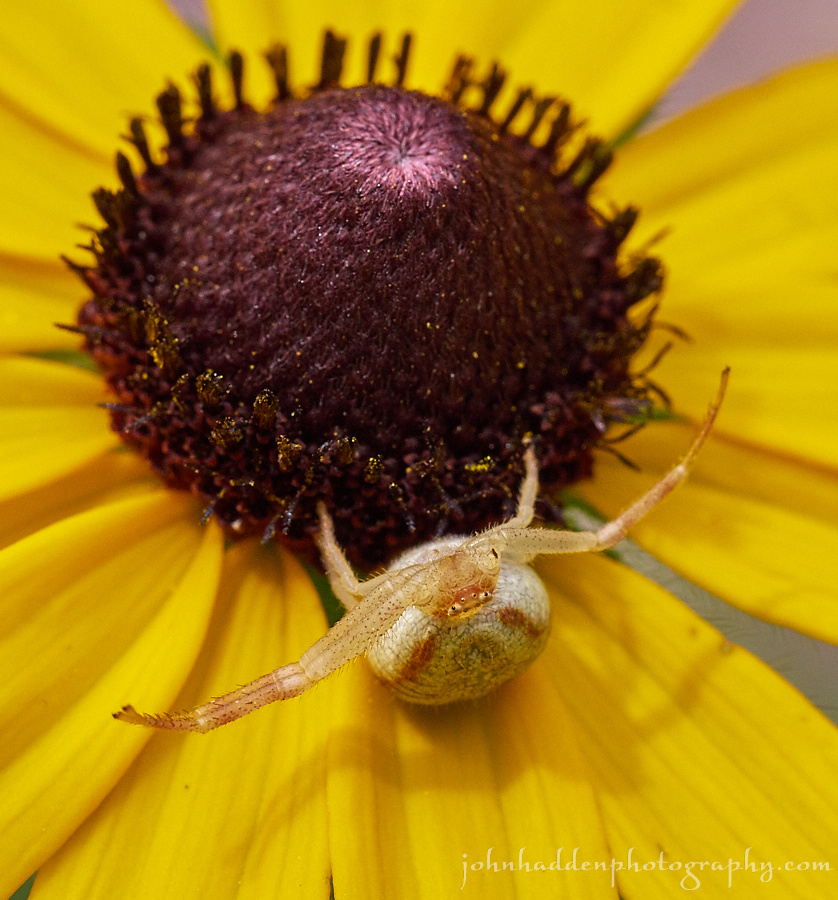
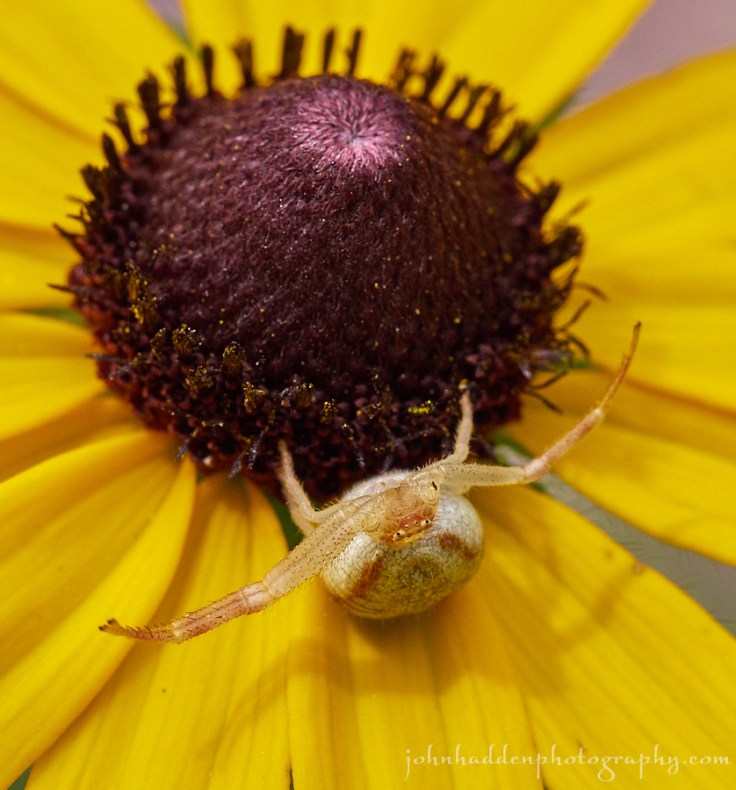
A crab spider casually waiting for prey on a coneflower

I spotted this crab spider hanging out with open arms from our back deck. It was most happy to pose for me as I rattled off shots. Woe betide the unsuspecting insect who comes to feed on the coneflower!

Panasonic GX8, Olympus 60mm macro lens, ISO 800, f/8, 1/200″ exposure.

Along the edge

chicory-side
Delicate chicory stamens dusted with pollen

A close up view of a chicory blossom reveals delicate stamens dusted with pollen.

Panasonic GX8, Olympus 60mm macro, ISO 800, f/8, 1/320″ exposure.

Dusted

cinquefoil-bee
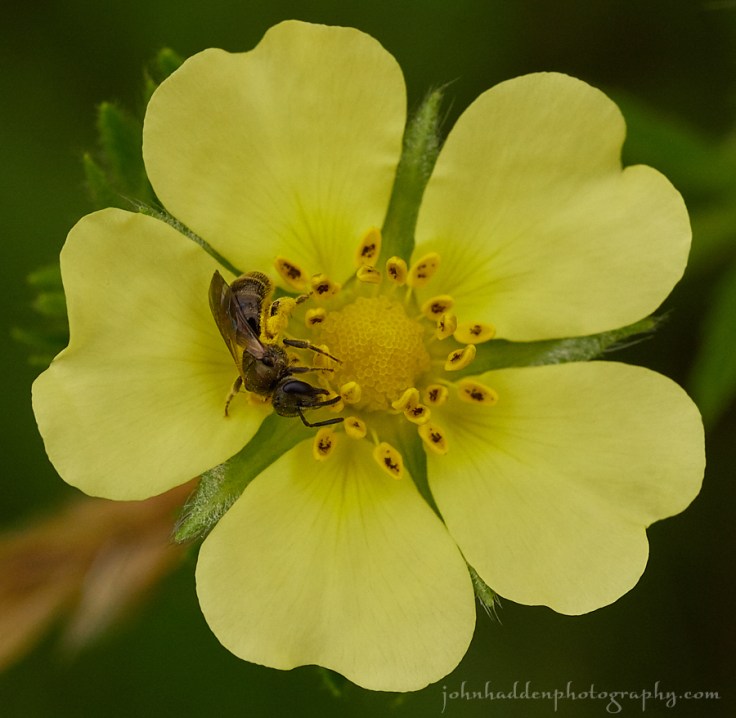
A solitary bee dusted with cinquefoil pollen

This little solitary bee was diligently gathering pollen on a rough-fruited cinquefoil blossom in our front field. I love the detail revealed at the center of the flower.

Panasonic GX8, Olympus 60mm macro lens, ISO 800, f/8, 1/800″ exposure.

Lurking

crab-spider-susan
A crab spider awaits its prey on a black-eyed Susan

On a walk this afternoon, I saw several black-eyed Susans with a crab spiders lurking amongst their petals. When I got in close, however, the wily spiders would duck under the petals. This spider, however, was more than happy to pose for me as I rattled off many frames.

This is the first time out for a new lens—an Olympus 60mm, f/2.8 macro. I think it’s a keeper!

Panasonic GX8, Olympus 60mm macro lens, ISO 800, f/8, 1/800″ exposure.

Chicory blue

chicory-butterfly
Chicory blooming along East Street

Chicory—a true flower of summer—is blooming along East Street. This unidentified butterfly was enjoying the nectar and paid very little attention to me as I snapped several photos.

Panasonic GX8, Lumix 14-140mm lens @ 140mm, ISO 500, f/6.3, 1/1300″ exposure.

Hummingbird Clearwing Moth

hummingbird-moth
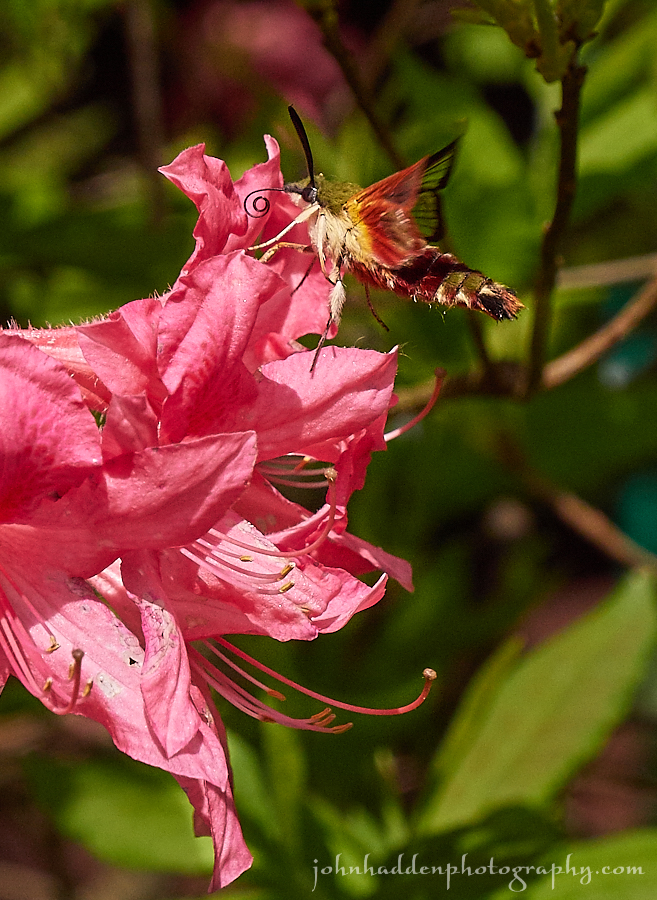
A hummingbird clearwing moth at one of our azaleas

Hummingbird moths are wonderfully surprising insects. The first time I saw one many years ago, I had no idea what I was looking at. It moved like a hummingbird, but obviously wasn’t one. Nor was it a large bumble bee. There are two varieties of hummingbird moth common to North America—the Snowberry Clearwing and the Hummingbird Clearwing (pictured above). The reddish coloration is a clear indication of the latter. This little guy was quite busy at the azalea blooming by our kitchen window.

Panasonic GX8, Lumix 24-140mm lens @ 61mm, ISO 800, f/8, 1/2000″ exposure.

Blog at WordPress.com.

Up ↑