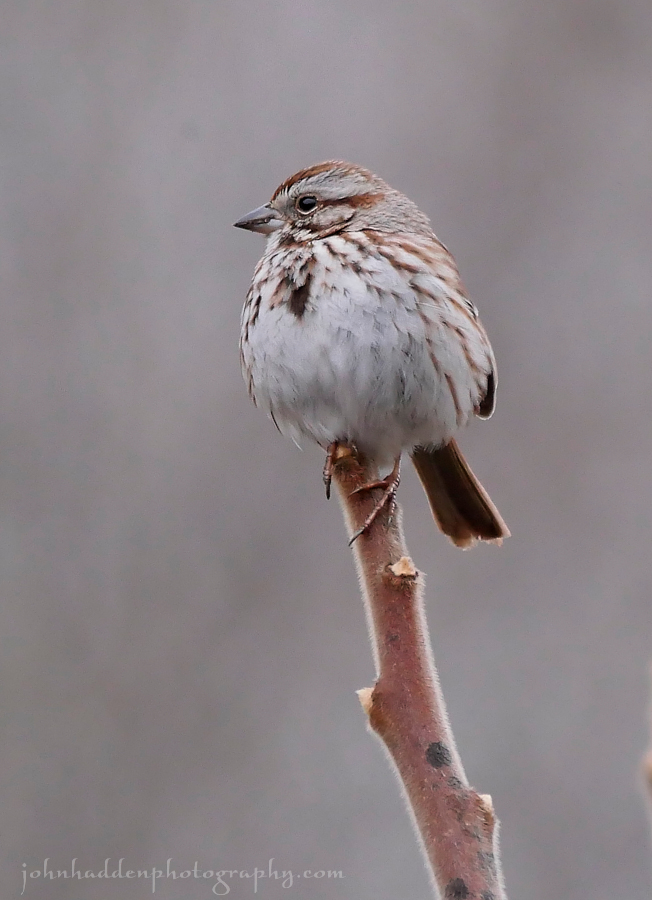
A song sparrow perches on a sumac branch in our front field
Song sparrows are an early returning species in our area. Their lovely fluid song means spring has truly arrived. This little fellow was quite patient with me as I took several shots of him.
The bloodroot down by the brook has finally opened all the way
The prolific patch of bloodroot we have down by Fargo Brook has finally decided to open up fully. I learned from Mary Holland’s excellent book, “Naturally Curious Day By Day”, that bloodroot will close its petals on cloudy and chilly days, only opening fully when it’s sunny and above 47 degrees. It does this in order to save pollen and prevent self-pollination. When the temperature is above 47, some insect pollinators will become active and do the job. I noticed one such pollinator—a fly—doing just that as I was taking this shot. The fly was wary of me, however, and wouldn’t let me get a shot of it on the job.
Panasonic GX8, Olympus 60mm macro, ISO 800, f/11, 1/640″ exposure.
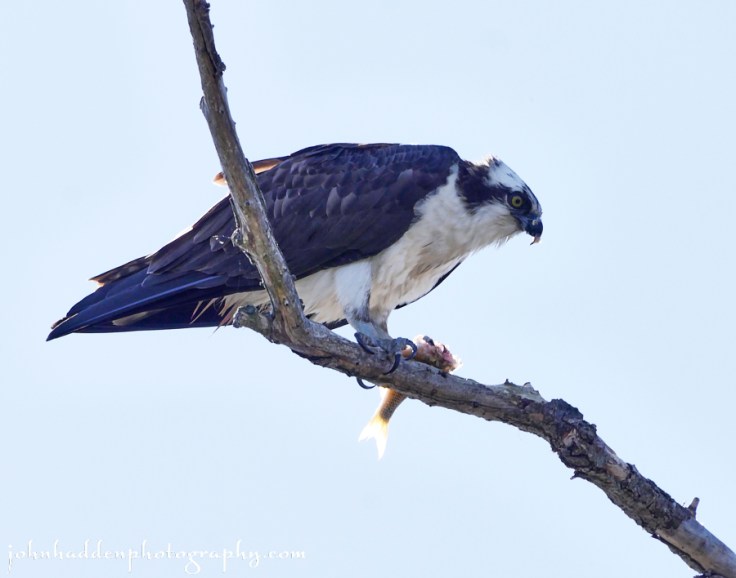
Robin & I paddled around the mouth of Lewis Creek yesterday morning. We had the pleasure of getting in close to this osprey and its mate who were camped out in a tree on one of the small (now inundated) islands out on Lake Champlain. This fellow had recently caught a fish and was enjoying a morning meal.
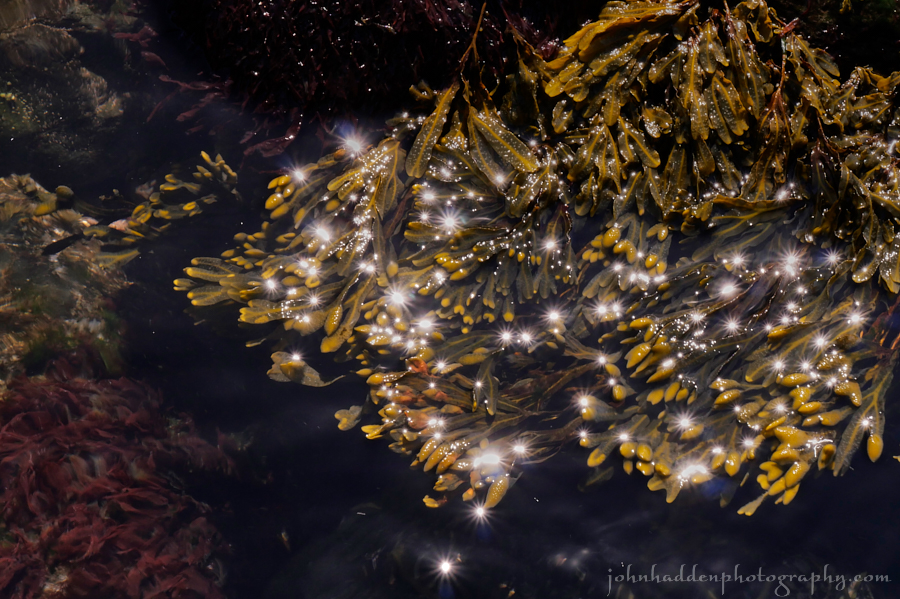
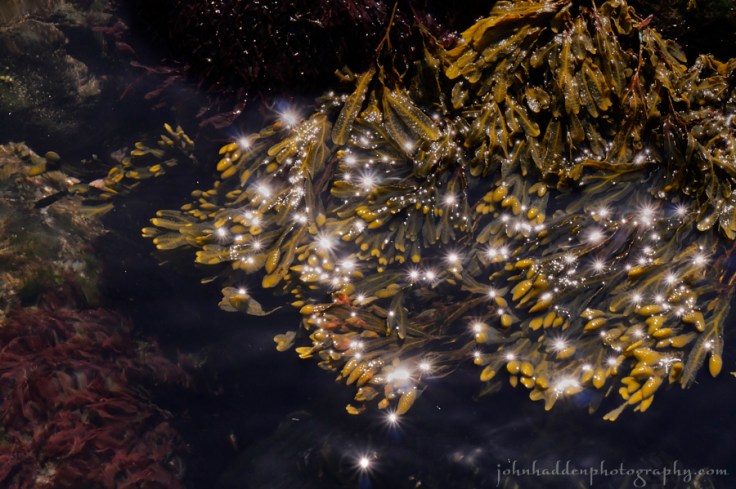
We travelled to Maine over the weekend to take in a little bit of ocean. While exploring the rocks and tide pools of Fort Foster Park, I snapped these shots of sunlight glinting off the water and rockweed. A relatively slow shutter speed and tight aperture create the wonderful starbursts and light squiggles on the water.
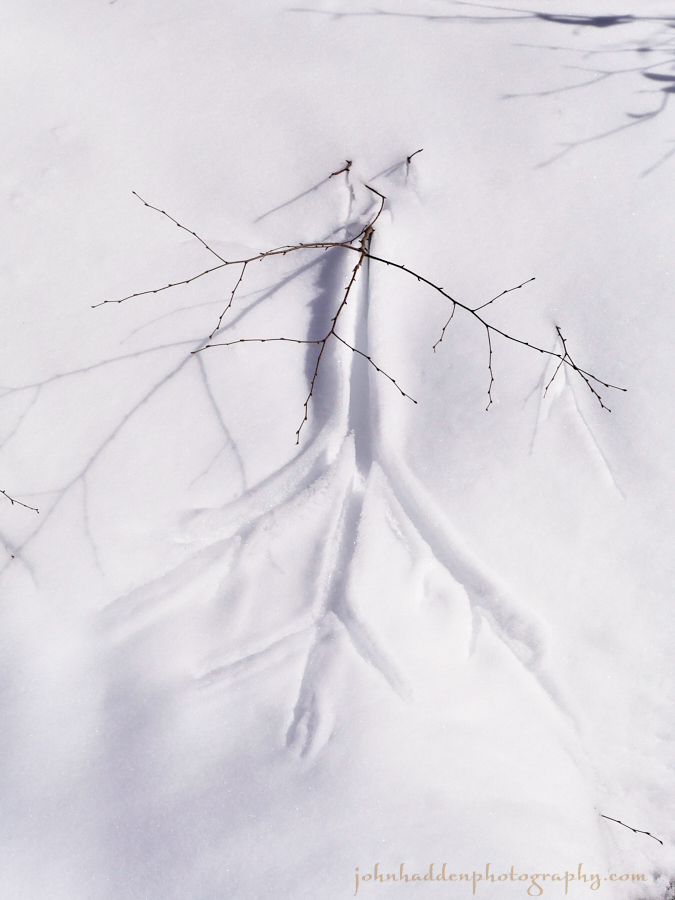
A small twig sapling sprung from the snow creates a fleeting impression
While skiing up to Bald Hill at the Camel’s Hump Nordic Ski Area yesterday, I came across several places where small twig saplings had been bent beneath the deep snow. As the warm March sun went to work on south facing sections, the twigs had sprung loose to create fleeting impressions in the snow. Kind of a second shadow.
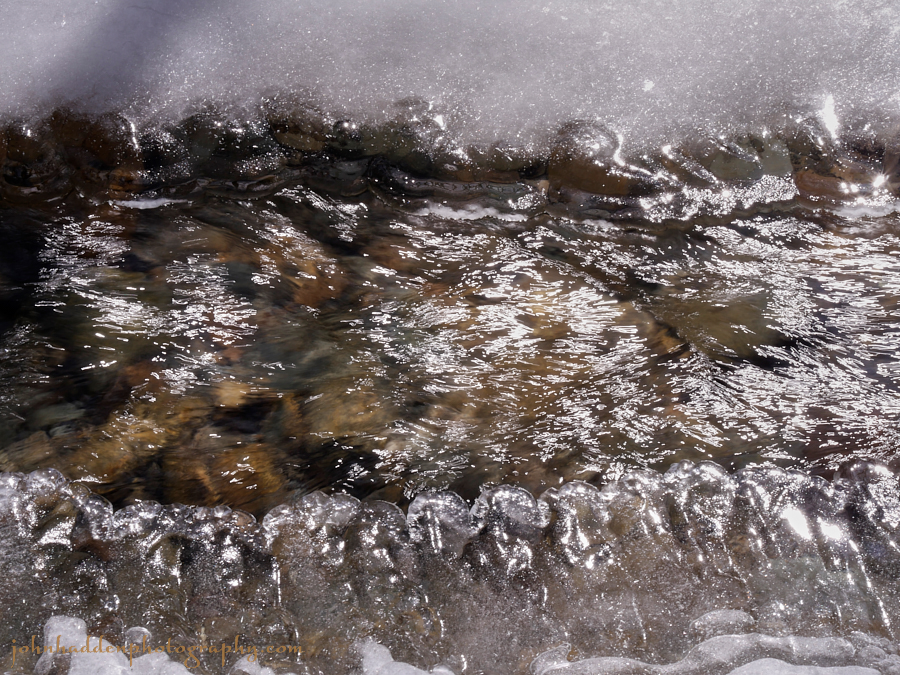
A few years ago, I stumbled across what I’ve dubbed the “cellophane effect” when shooting moving water. I found myself exploring it again a bit the other day as I took some photos along Fargo Brook.
The key to achieving the effect is a fairly slow shutter speed (~1/25″) and shooting with the sun in front of you so that the light is bouncing directly off the water towards the lens. The light traces fine squiggly lines across the moving water.
Panasonic GX8, Lumix 14-140mm lens @ 140mm, ISO 100, various apertures, 1/25″ exposure.









 John Hadden Photography