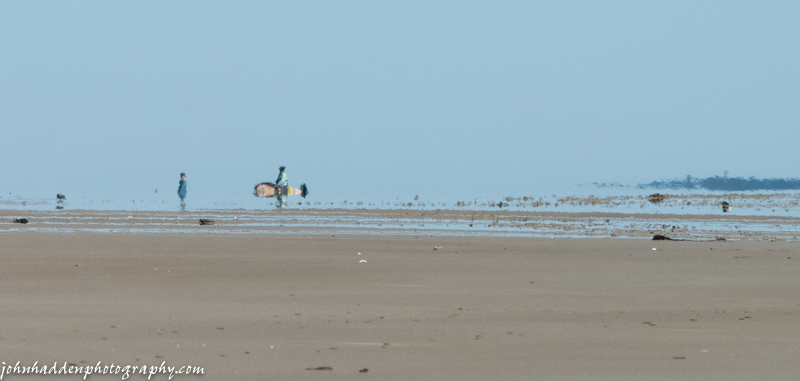
Popham Beach in Maine offers some lovely views and miles of sandy beach. I was struck by this view of a horse and rider (and a person walking a dog) just over the edge of the “mirage” horizon.
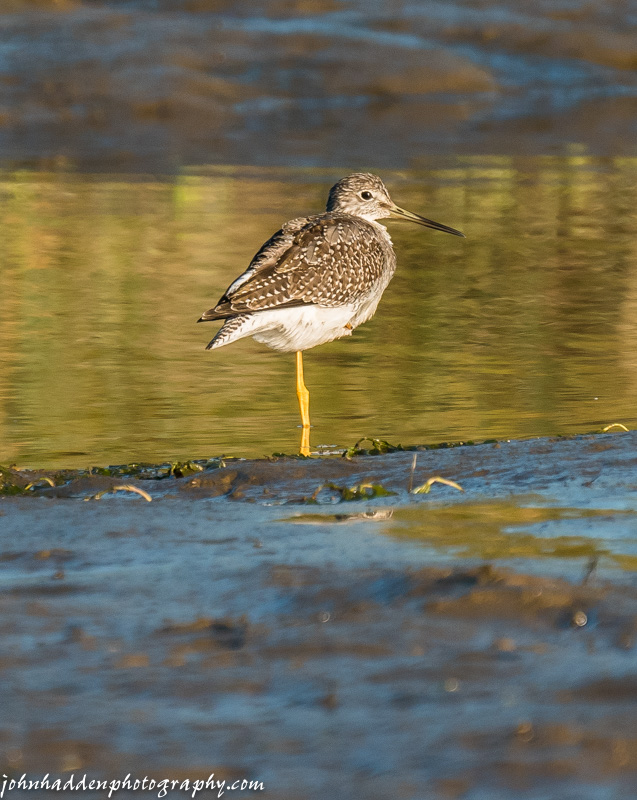
On a late afternoon paddle up an estuary, we came across a few sandpipers (I’m not very good with my shorebird identification…) This little fellow stuck around for quite a while allowing me to get in fairly close for some shots.
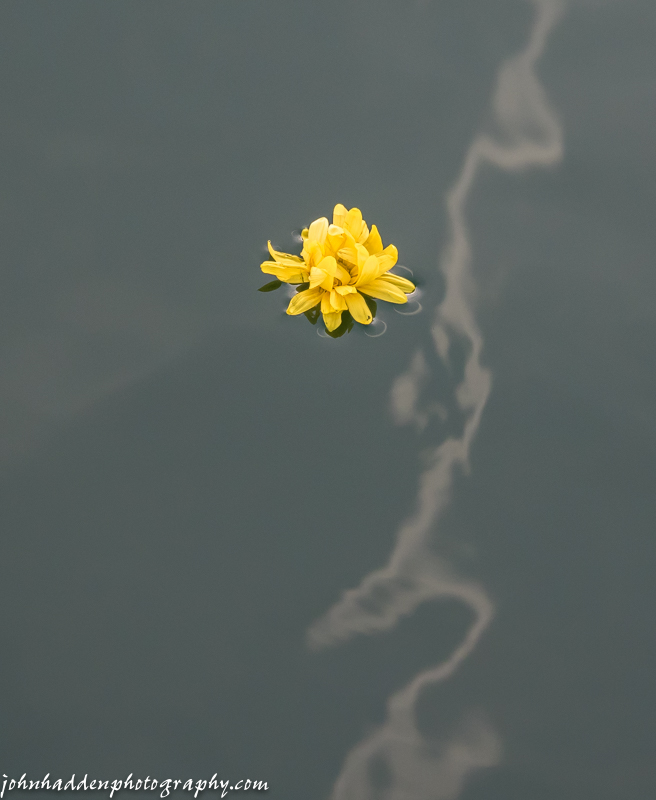
There’s a story behind these photos: Robin & I were in Boothbay Harbor the other evening. We had noticed two young women—dressed very fashionably and sporting carefully applied makeup—taking selfie after selfie of themselves in various places around town. We were on the footbridge across the harbor, and the two women were there, taking selfies of course. As they passed us, a yellow flower fell out of one woman’s hair and onto the bridge. Robin picked up the flower—smelling of the woman’s perfume—and tossed it onto the water. As we watched it drift, we noticed the contrails reflected in the water. Photography ensued…
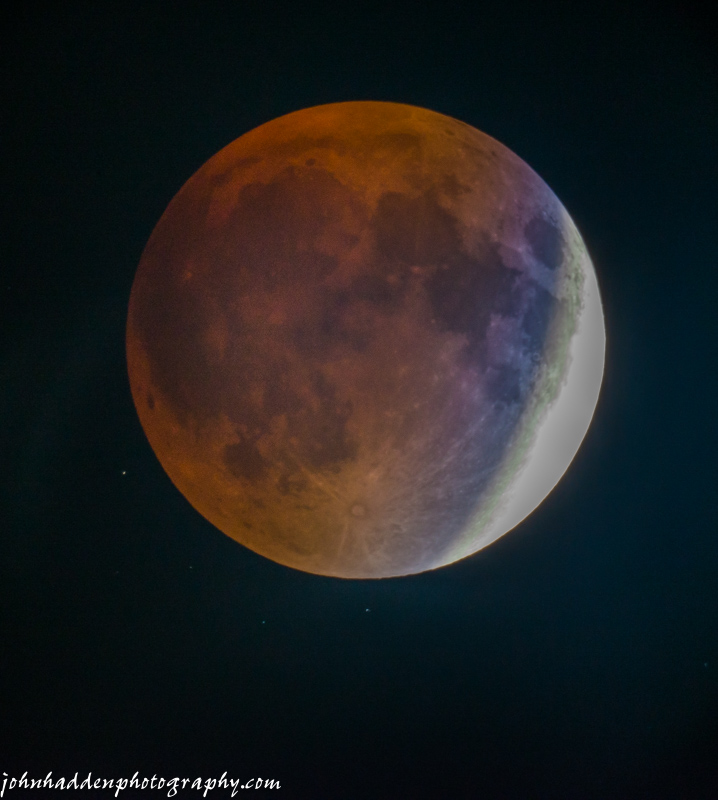
I hope you all had a chance to see the eclipse last night. It was truly spectacular. We had a bit of a gathering here with a few neighbors. I had the observatory open and was taking pictures (of course…) but the best view was in a lawn chair under the stars. I think my favorite part of the eclipse was the way the stars and the Milky Way gradually emerged as the moon reached totality. Wonderful. And the color! Wow!
I took the above photo using my Nikon D600 and an old Celestron 6″ telescope as a lens at prime focus. My results were varied and not completely satisfying (at least to my level of pickiness!) This was a half-second exposure at ISO 640. I think the scope is an f/10 at 1500mm.
Our front field is abuzz with pollinators making the most of the warm weather. There are a variety of different insects working the asters—white, blue, and purple stemmed—and goldenrod. This honey bee is nicely dusted with a bit of pollen.
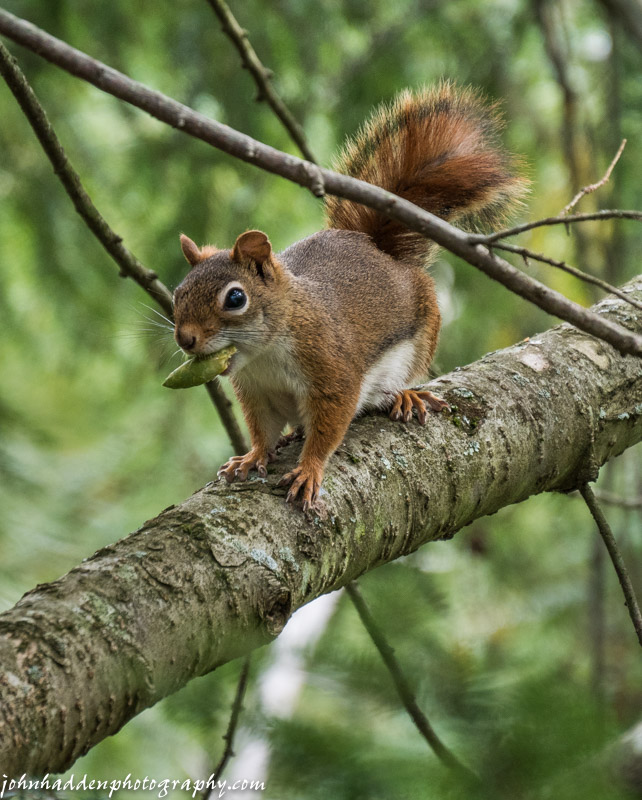
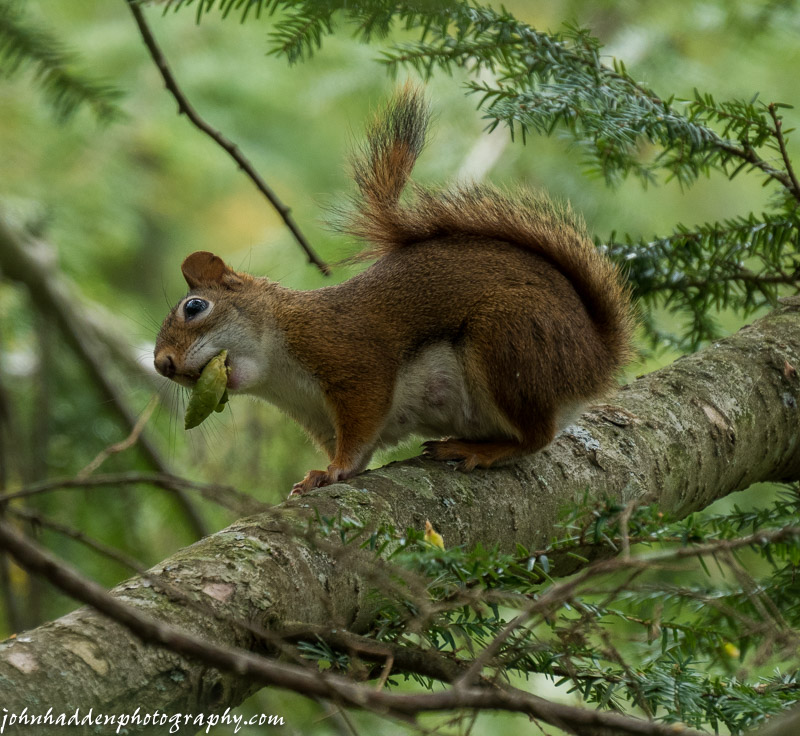
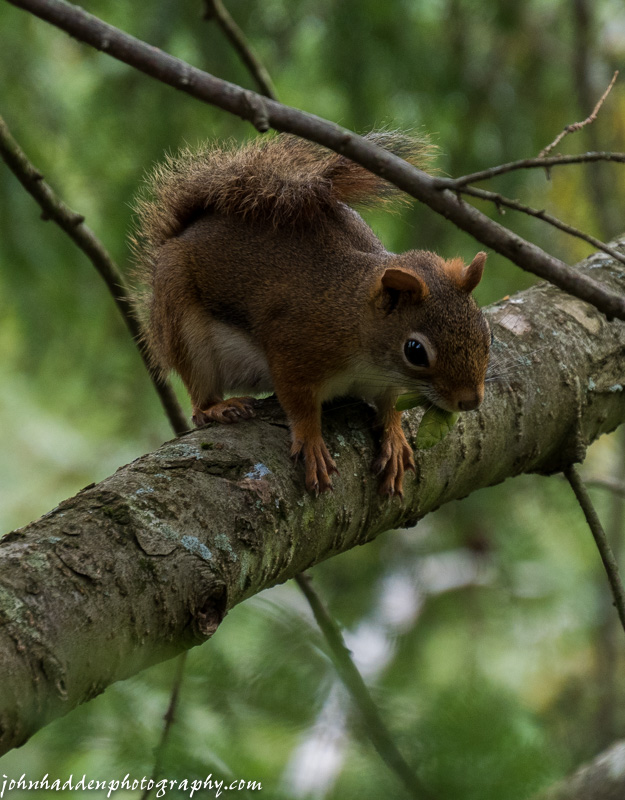
This little red squirrel was quite busy in the hemlock tree right in front of the Studio steps. She’s been spending a good part of each recent day munching away on the fresh green cones that are prolific this year.
This little lady looks like she might be either gestating or nursing. Red squirrels are unique in that the females go through two breeding seasons. They breed from March until May, and then again from July until September. Their gestation period lasts for forty days, at which point they give birth to a litter which contains anywhere from three to six baby squirrels. You can read more about red squirrels here.





 John Hadden Photography