Search

John Hadden Photography

Photography of the Natural World

Category

nature

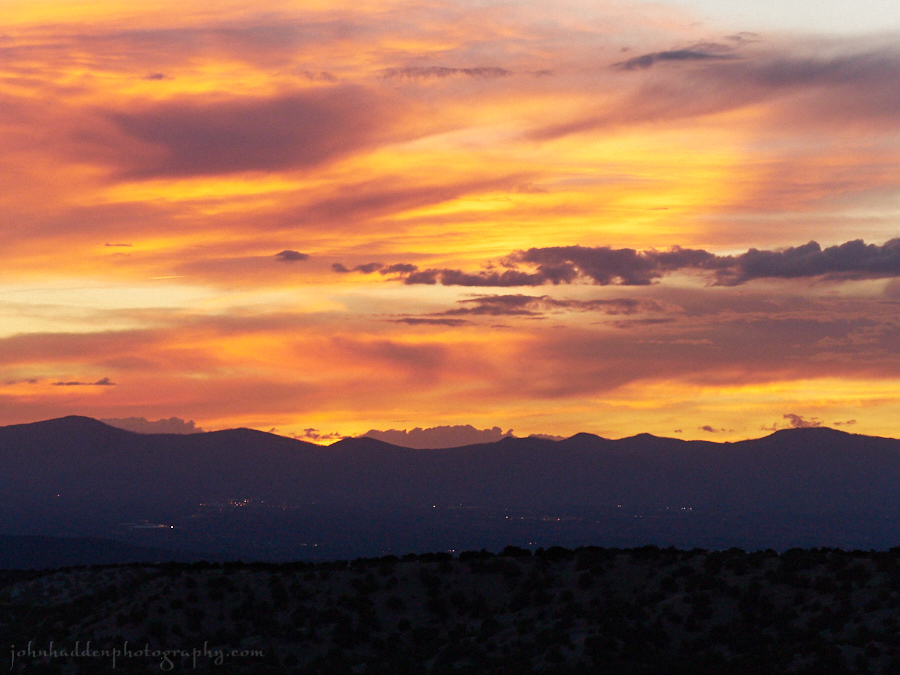
Atomic City Sunset

los-alamos-sunset
The sun sets over the Jemez mountains and Los Alamos, NM

While in New Mexico, we stayed at the lovely home of some friends in Santa Fe. The 360 degree views from the hilltop house were stunning with the Santa Fe and Sangre de Cristo mountains to the east and the Jemez mountains to the west. As the sun set to the west, the lights of Los Alamos would begin to twinkle beneath the Jemez ridgeline.

I found myself thinking about Los Alamos quite a bit. This was the place where the first atomic bomb was developed and tested. We visited the town on our way back from hiking in the Jemez Mountains. Unlike neighboring Santa Fe—where adobe homes and businesses are the rule—the architecture of Los Alamos is all metal and glass. Very modern. Los Alamos calls itself the “Atomic City”— a moniker I understand is taken with pride, but I can’t help but feel a bit conflicted about it. The work done there might have helped to end the Second World War, but it’s also ushered us into a far more dangerous world.

Panasonic GX8, Lumix 14-140mm lens @ 69mm, ISO 1600, f/8, 1/50” exposure.
Butterfly Heaven

painted-lady-western-white-choke-cherry
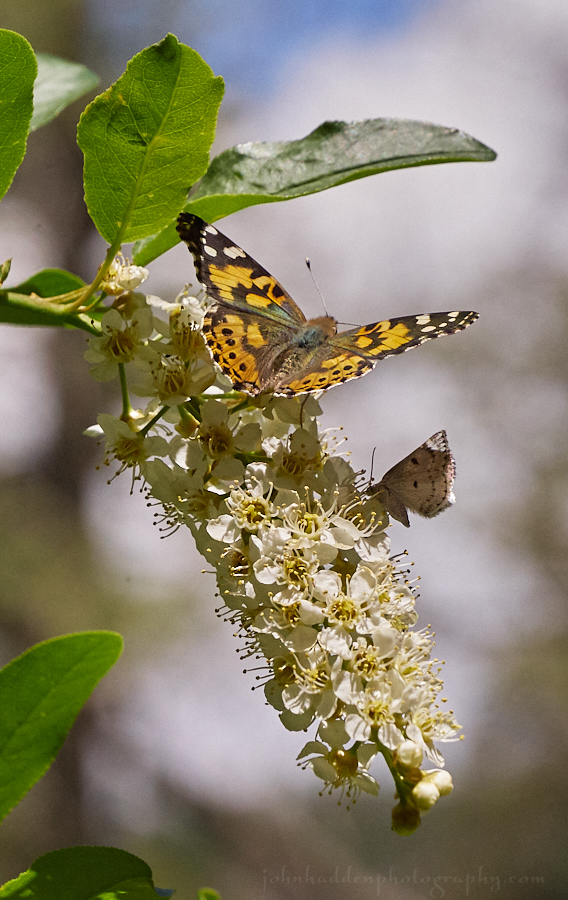
Painted lady and western white butterflies enjoy the sweet nectar of choke cherry flowers

While hiking near the east branch of the Jemez River in New Mexico, we came across this flowering choke cherry bush that was alive with butterflies. There must have been several hundred—mostly small western whites and a few painted ladies—swirling about and lapping up the sweet smelling nectar of the flowers.

Panasonic GX8, Lumix 14-140mm lens, ISO 1600, f/10, 1/1600″ exposure

Great Sand Dunes, Colorado

sand-dunes
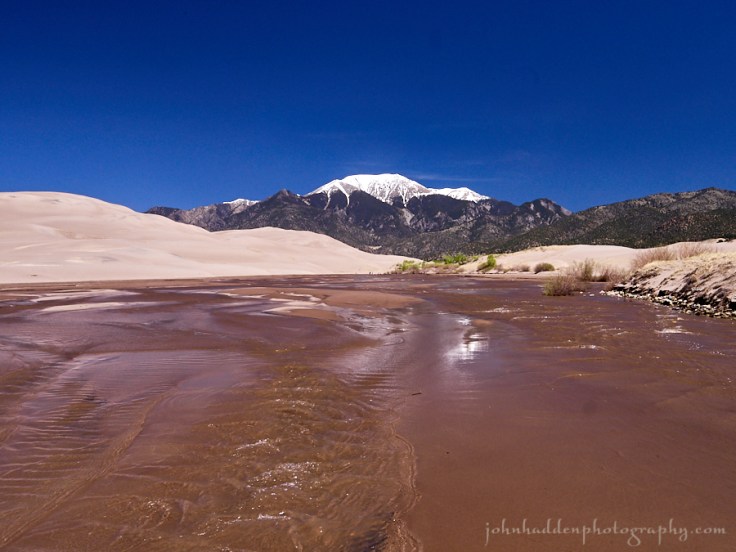
Water, sand, and mountains at Great Sand Dunes National Park in Colorado

The Great Sand Dunes National Park in Colorado is a fascinating place. The park contains the tallest sand dunes in North America, rising to a maximum height of 750 feet from the floor of the San Luis Valley on the western base of the Sangre de Cristo Range, covering about 19,000 acres. Researchers say that the dunes started forming less than 440,000 years ago. In this photo, Medano Creek flows in curious pulses along the southeast edge of the dunes, while snow covered peaks of the Sangre de Cristo rise behind.

Panasonic GX8, Olympus 9-18mm lens @ 18mm, ISO 400, f/14, 1/100″ exposure.

Bleeding Hearts

bleeding-hearts
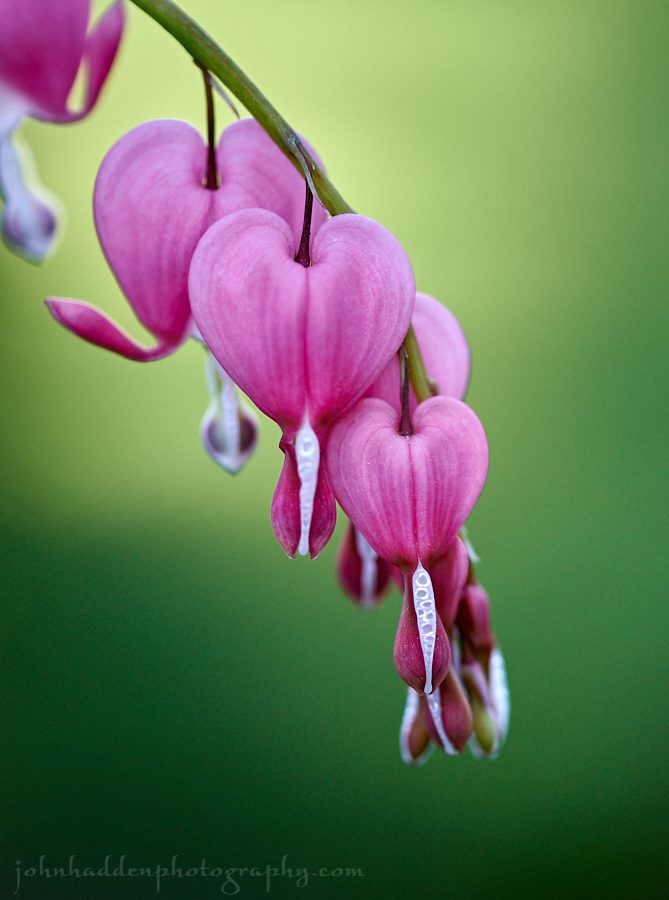
Bleeding hearts in bloom in our ornamental garden

Bleeding hearts are in bloom now in our ornamental garden. Though I usually photograph wildflowers, these showy cultivars couldn’t help but draw my lens!

Nikon D600, Sigma 105mm macro lens, ISO 1250, f/4, 1/1000″ exposure

“F” is for Fern

f-fern
A new fern curls to suggest its first letter

The ostrich ferns are unfurling along Fargo Brook. It wasn’t until I processed this image that I realized it suggested the letter “F”

Nikon D600, Sigma 105mm macro, IOS 1250, f/4, 1/500″ exposure

Wild Apple

apple-blossom-2
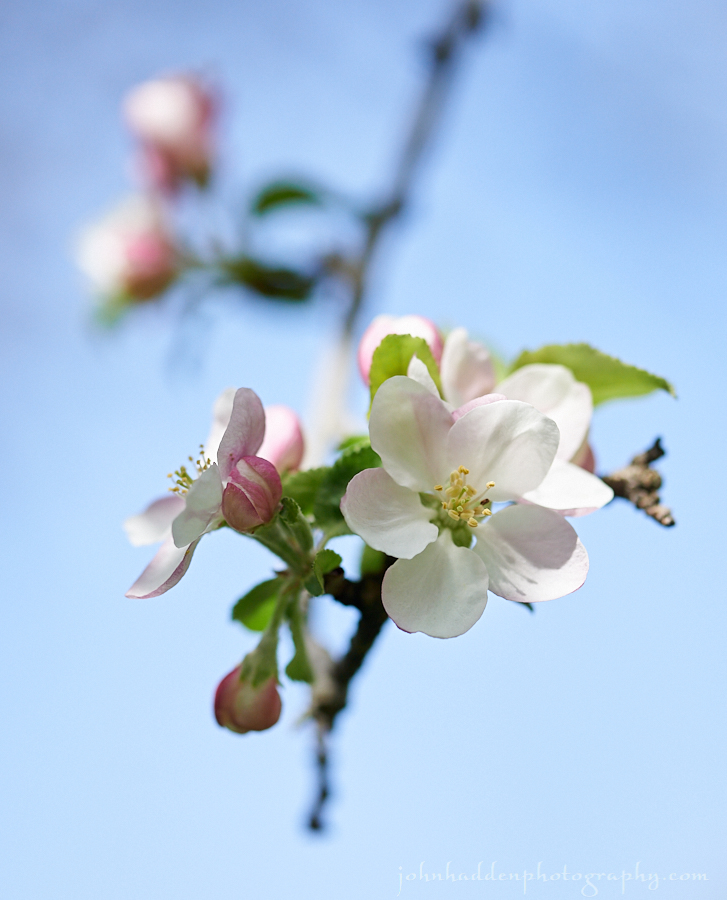
Wild apple blooming

We have quite a number of wild apple trees in our front field and down in the back yard along Fargo Brook. My guess is that, over the years, deer have propagated the trees by muching apples from one and depsoitig the seeds elsewhere. We’ve pruned a few of these trees, and they provide us with apples for cider and apple sauce. This looks to be another good year if we can avoid a late frost.

Nikon D600, Sigma 105mm macro lens, ISO 400, f/4, 1/2500″ exposure.

Bloodroot and tin

bloodroot-tin-can
Bloodroot and rusted tin

I couldn’t resist the juxtaposition of these lovely bloodroot blossoms and the rusted tin can that we came across the other day while walking along the Lamoille Valley Rail Trail in St. Johnsbury.

Panasonic GX8, Lumix 14-140mm lens @ 81mm, ISO 800, f/9, 1/250″ exposure.

Wild Oats

wild-oats
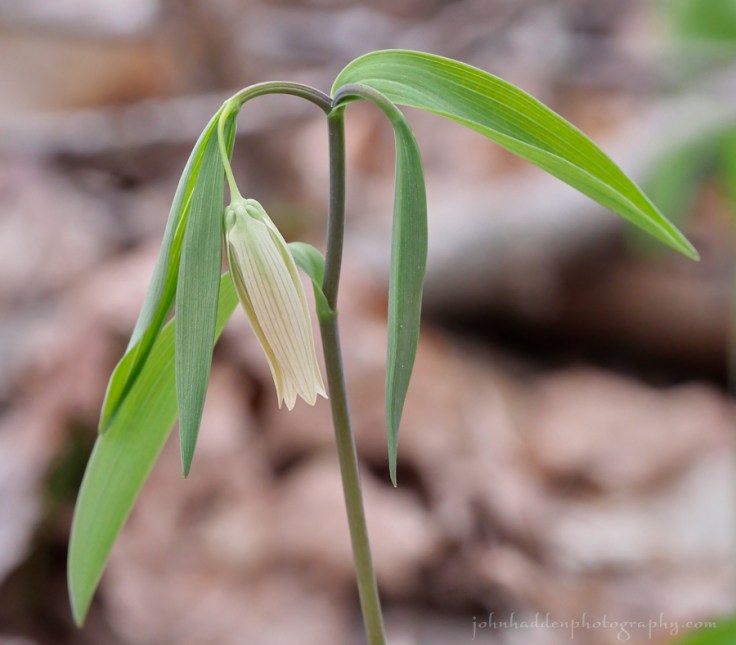
Wild oats in bloom near a local beaver pond

Wild oats (a.k.a. sessile bellwort) are in bloom. These diminutive plants grow in colonies. They spread asexually by means of long underground stolons (think rhizomes) with most plants in a colony not flowering. There’s a prodigious colony up past the beaver pond along the old Mailbox trail.

Panasonic GX8, Olympus 60mm macro, ISO 1250, f/8, 1/125″ exposure.

Red Trillium

red-trillium
Red trillium blooming along Taft Road

Red trillium (also known as wake-robin) is blooming along Taft Road. This wine colored three-petaled flower is a real eye-catcher against the forest floor this time of year.

Panasonic GX8, Olympus 60mm macro, ISO 1250, f/10, 1/160″ exposure

Blog at WordPress.com.

Up ↑