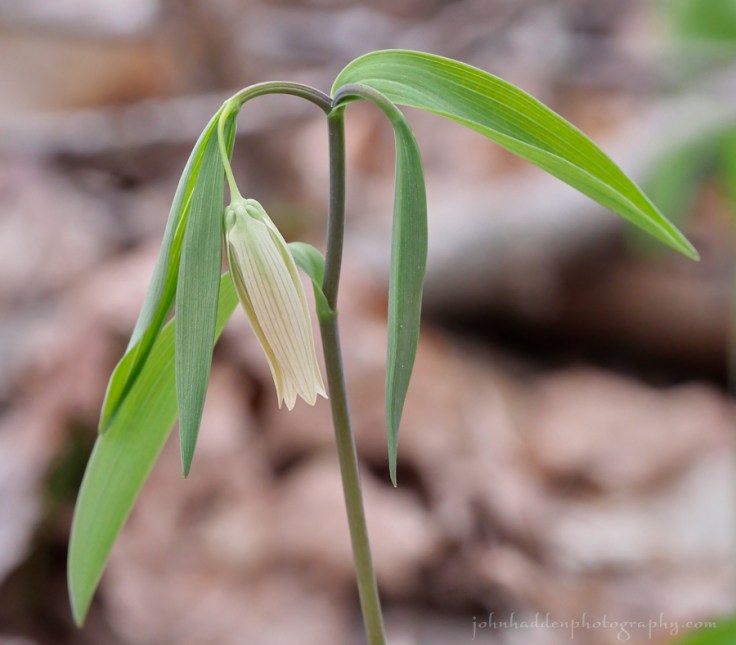
Wild oats (a.k.a. sessile bellwort) are in bloom. These diminutive plants grow in colonies. They spread asexually by means of long underground stolons (think rhizomes) with most plants in a colony not flowering. There’s a prodigious colony up past the beaver pond along the old Mailbox trail.
Panasonic GX8, Olympus 60mm macro, ISO 1250, f/8, 1/125″ exposure.
Red trillium (also known as wake-robin) is blooming along Taft Road. This wine colored three-petaled flower is a real eye-catcher against the forest floor this time of year.
Panasonic GX8, Olympus 60mm macro, ISO 1250, f/10, 1/160″ exposure
Amelanchier (also known as serviceberry, shadbush, and shadblow, among others) is a flowering shrub that blooms this time of year. Its white blossoms are quite visible in the woods before the rest of the neighboring trees have leafed out.
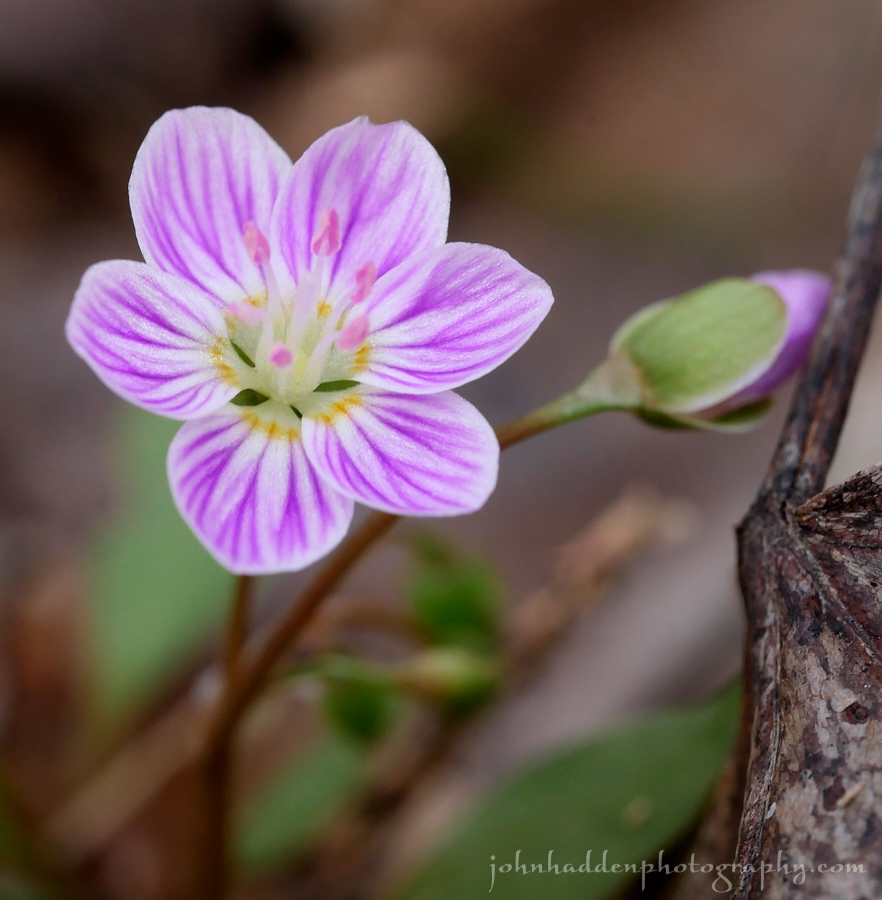
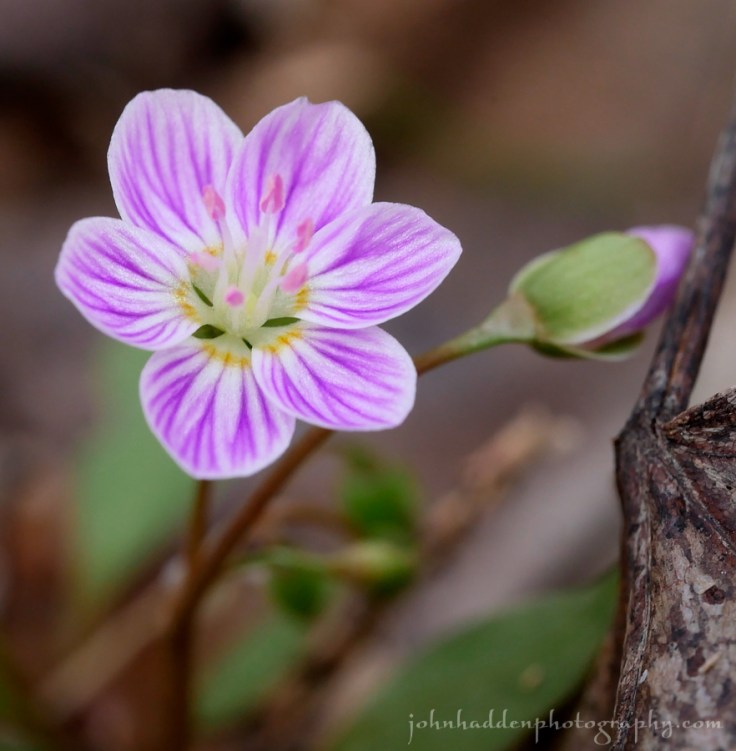
An exceptionally colorful spring beauty blooming in the woods
Virginia Spring Beauties (Claytonia virginica) are quite common in our woods this time of year and are one of the very earliest spring ephemeral wildflowers. We’re getting into peak season for them now, and the woods around here are carpeted in places smell sweetly of so many little flowers. This particular blossom popped out to me as it had the brightest and most vibrant pink of any that I saw on my walk yesterday.
Panasonic GX8, Olympus 60mm macro, ISO 800, f/5.6, 1/320″ exposure
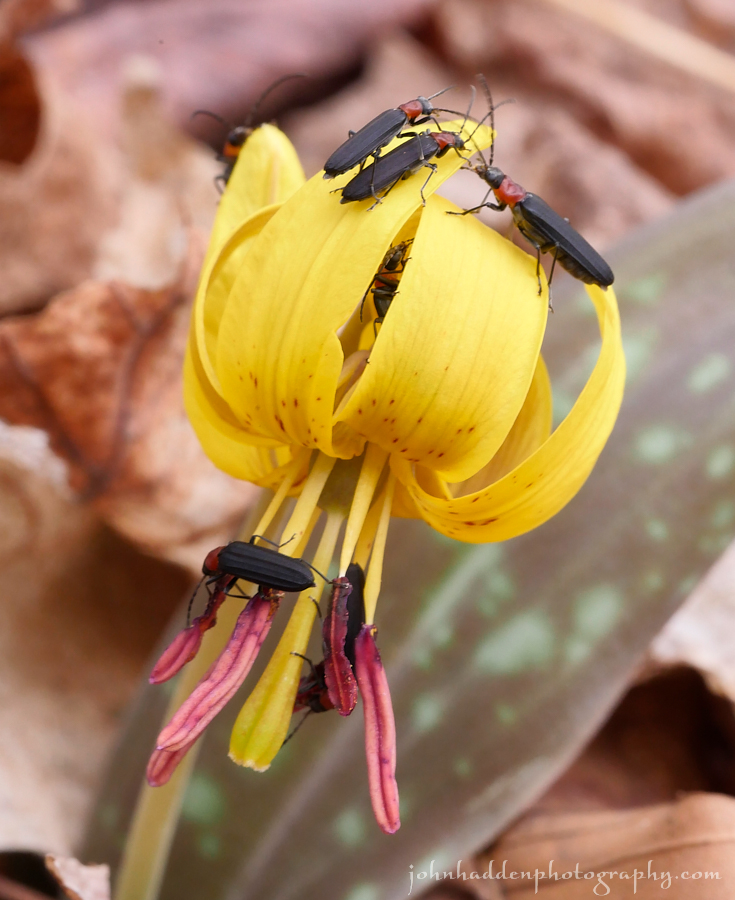
False blister beetles eating pollen and mating on a trout lily
While bushwacking up above the Camel’s Hump Nordic trails today, I came across several trout lilies in full bloom. Kneeling down to get a good shot, I noticed this congregation of false blister beetles feeding on the pollen and mating. According to Mary Holland’s excellent “Naturally Curious Day By Day”, these beetles are commonly found on trout lilies (the lilies being one of the early spring ephemerals) where they eat and do their business pretty much at the same time.
Panasonic GX8, Olympus 60mm macro, ISO 800, f/11, 1/160″ exposure.
While out on a wildflower walk up at the Camel’s Hump Nordic Ski Area today, I came across a motherlode of sharp-lobed hepatica. Dozens of blossoms were blooming along the trail, and keeping good company as well with trout lilies, blue cohosh, and spring beauties. I’ve dubbed the place “Wildflower Junction”!
Panasonic GX8, Olympus 60mm macro, ISO 1250, f/13, 1/500″ exposure.
The bloodroot down by the brook has finally opened all the way
The prolific patch of bloodroot we have down by Fargo Brook has finally decided to open up fully. I learned from Mary Holland’s excellent book, “Naturally Curious Day By Day”, that bloodroot will close its petals on cloudy and chilly days, only opening fully when it’s sunny and above 47 degrees. It does this in order to save pollen and prevent self-pollination. When the temperature is above 47, some insect pollinators will become active and do the job. I noticed one such pollinator—a fly—doing just that as I was taking this shot. The fly was wary of me, however, and wouldn’t let me get a shot of it on the job.
Panasonic GX8, Olympus 60mm macro, ISO 800, f/11, 1/640″ exposure.
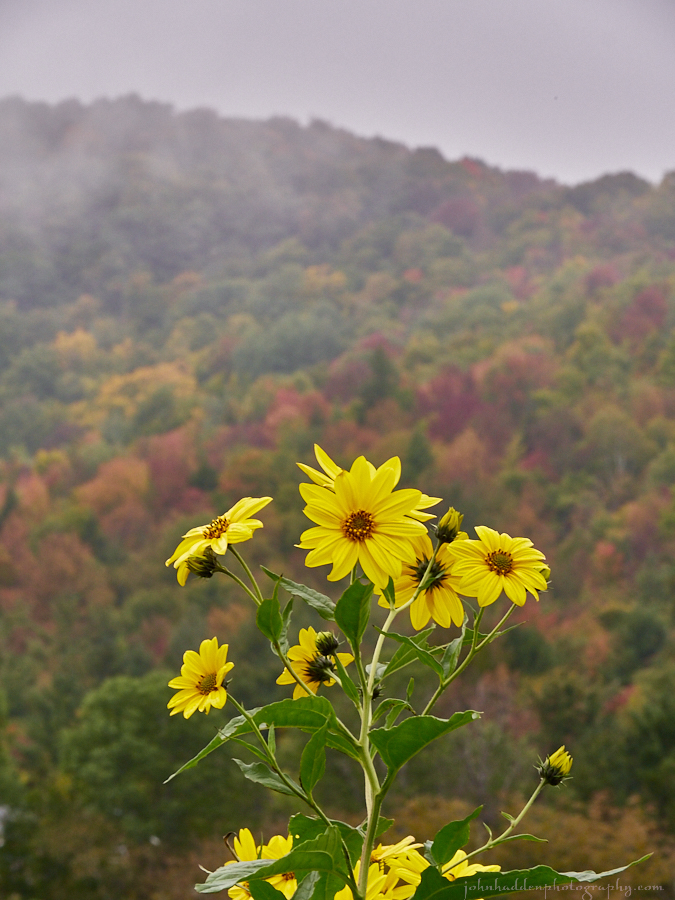
The fall foliage is creeping towards peak here in Huntington. The colors make a fine backdrop for blooming Jerusalem artichoke along the Main Road in Huntington Center.
The white hydrangea by our back patio puts on its final blush of the season
The hydrangea by our back patio has sported bright white flowers through the summer. These flowers have been a magnet for pollenators of many species. Now, as we enter fall, the flowers take on their pink blush before drying to light tan.







 John Hadden Photography